

Balaji Inc is a trusted animal health and veterinary care company serving poultry and livestock farmers, feed manufacturers, integrators, distributors, and corporate buyers across India. With a strong foundation in animal nutrition, poultry health, a...
- (+91) 9834536811
- info@balajiinc.co
- S.No.164, Sahyadri Industry Compound, Fursungi, Tal: Haveli, , Pune, Maharashtra, India. 412308
© 2020 BALAJI INCORPORATION. All Rights Reserved
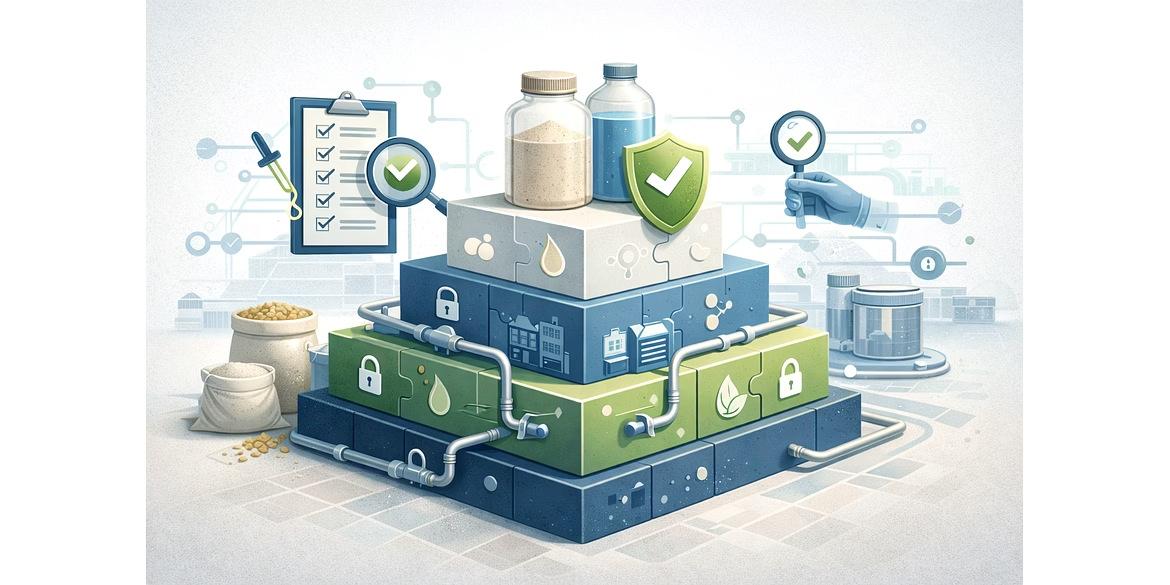

When sourcing animal feed supplements for poultry and livestock, manufacturing quality standards are essential for product safety, batch consistency, and long-term performance. For importers and international buyers, understanding how feed supplements are manufactured supports risk management, regulatory compliance, and market acceptance.
This guide outlines the manufacturing and quality factors buyers should evaluate before partnering with a feed supplement manufacturer for domestic distribution or international trade.
Feed supplements directly influence animal health, productivity, and farm profitability. Inconsistent or poorly manufactured products can lead to performance losses, regulatory issues, and reputational risk for buyers and distributors.
Manufacturers with strong quality systems are better positioned to deliver reliable feed supplements across multiple batches and markets, supporting consistent outcomes in poultry and livestock production.
Why quality standards are critical:• Ensure consistent nutrient delivery
• Protect animal health and welfare
• Reduce product variability and risk
• Support long-term buyer confidence
Core Elements of Strong Manufacturing Capability
A reliable feed supplement manufacturer operates with structured production systems designed to ensure accuracy, repeatability, and scalability. This is especially important for international buyers who depend on consistent supply across repeat orders and shipments.
Well-defined manufacturing processes reduce errors and improve product stability, supporting dependable performance in commercial poultry and livestock environments.
Key manufacturing strengths to evaluate:• Capability to produce powder and liquid formulations
• Standardized production workflows
• Controlled blending and formulation systems
• Scalable capacity for bulk and repeat orders
Quality manufacturing begins with raw material selection. Reliable manufacturers source ingredients from approved suppliers and conduct checks to verify identity, purity, and suitability—protecting formulation integrity and final product performance.
Raw material quality practices include:• Supplier qualification and evaluation
• Incoming material inspection and verification
• Consistency in ingredient specifications
• Documentation and traceability
Process Control and Batch Consistency
Batch-to-batch consistency is one of the strongest indicators of manufacturing reliability. Strong process control helps ensure every production batch meets defined quality parameters, protecting performance outcomes across markets.
International buyers rely on consistent feed supplement manufacturing to maintain stable product performance in poultry and livestock production systems, particularly for bulk purchases and long-term supply programs.
Process control indicators include:• In-process quality monitoring
• Standardized formulation procedures
• Batch records and traceability systems
• Defined corrective action processes
Animal feed supplements are regulated in many countries to ensure safety and responsible use. Export-ready manufacturers operate in alignment with applicable veterinary and feed regulations and support documentation needs for target markets.
Buyers should confirm that suppliers can support compliance readiness through proper labeling, transparent product information, and regulatory documentation.
Compliance considerations include:• Alignment with animal health and feed safety standards
• Proper product labeling and documentation
• Transparent formulation disclosure when required
• Support for destination-country regulations
Product Stability, Packaging, and Shelf Life
For international trade, feed supplements must remain stable throughout storage and transportation. Quality manufacturers design formulations and packaging that protect product integrity across varying climates and logistics conditions—especially for long shipping routes.
Stability and export-grade packaging reduce risks related to moisture, heat exposure, contamination, and handling variability, supporting market acceptance and dependable performance.
Key stability and packaging factors include:• Defined shelf life and storage conditions
• Export-grade packaging materials
• Resistance to moisture, heat, and contamination
• Clear handling and usage instructions
Importers and international clients often prefer long-term partnerships over short-term sourcing. Manufacturers with structured production planning and inventory systems are better equipped to support ongoing demand, reduce delays, and strengthen business continuity.
Reliable supply strengthens buyer trust, supports repeat orders, and helps distributors maintain consistent availability in poultry and livestock markets.
Signs of supply reliability include:• Production planning and capacity management
• Consistent delivery performance
• Transparent communication
• Willingness to support long-term collaboration
How Buyers Can Evaluate Manufacturing Quality
Due diligence should go beyond pricing and product claims. Buyers are encouraged to evaluate manufacturing practices, documentation, and transparency before finalizing partnerships, reducing long-term risk and improving procurement confidence.
Recommended buyer evaluation steps:• Review manufacturing and quality documentation
• Assess batch consistency and traceability systems
• Discuss compliance and export support capabilities
• Evaluate supplier experience and technical expertise
1. Why are manufacturing quality standards important for animal feed supplements?
They ensure product consistency, safety, regulatory compliance, and reliable performance across batches and markets.
2. What should importers look for in a feed supplement manufacturer?
Strong manufacturing capability, quality control systems, compliance knowledge, and supply reliability.
3. Are powder and liquid feed supplements manufactured differently?
Yes, each requires specific process controls, equipment, and quality checks to ensure stability and consistency.
4. How can buyers ensure batch-to-batch consistency?
By working with manufacturers who follow standardized formulations, batch records, and controlled production processes.
5. Can manufacturers support regulatory requirements for different countries?
Export-ready manufacturers typically support documentation and compliance needs for various international markets.