

Balaji Inc is a trusted animal health and veterinary care company serving poultry and livestock farmers, feed manufacturers, integrators, distributors, and corporate buyers across India. With a strong foundation in animal nutrition, poultry health, a...
- (+91) 9834536811
- info@balajiinc.co
- S.No.164, Sahyadri Industry Compound, Fursungi, Tal: Haveli, , Pune, Maharashtra, India. 412308
© 2020 BALAJI INCORPORATION. All Rights Reserved
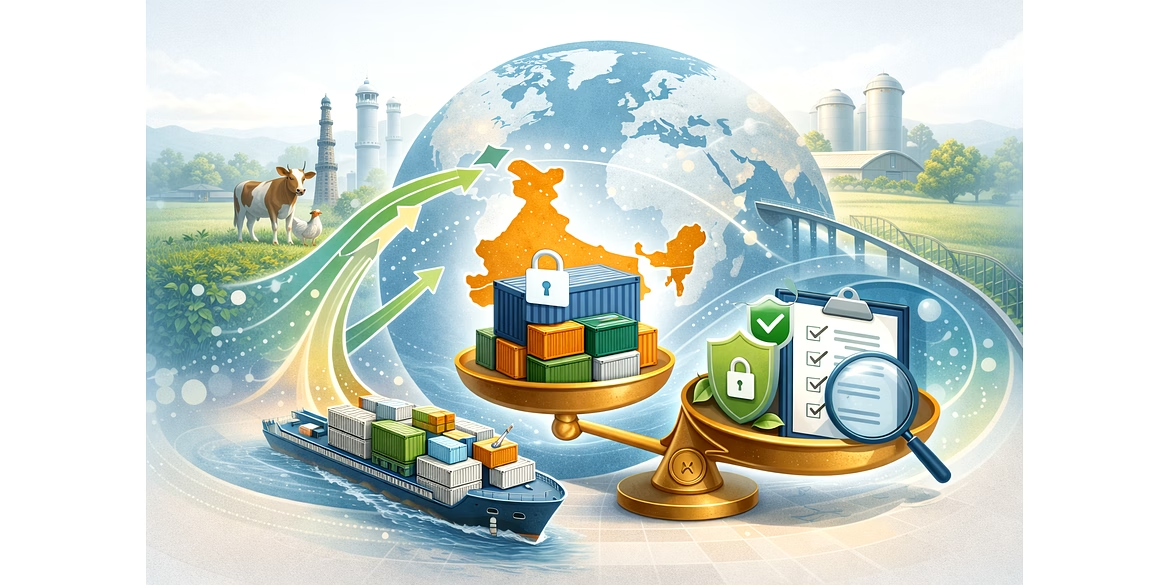

Exporting Animal Health Products from India: Key Considerations for Global Buyers
India has become a reliable sourcing destination for animal health products, feed supplements, and veterinary solutions, supplying buyers across Asia, the Middle East, Africa, and other regions. For global buyers and importers, evaluating export readiness and regulatory requirements is essential when sourcing from India.
With strong manufacturing capabilities, competitive pricing, and field-tested products, Indian manufacturers can meet international demand when the right quality, compliance, and supply systems are in place.
India’s animal health industry has expanded through technical expertise, large domestic market experience, and cost-effective manufacturing. Many manufacturers develop veterinary solutions and feed supplements under real farm conditions, improving practicality and adaptability across diverse international markets.
For international buyers, India can offer a strong balance of quality, scalability, and value—especially when paired with robust quality systems and transparent supply processes.
Key reasons global buyers source from India:• Competitive manufacturing and pricing
• Strong veterinary and technical expertise
• Experience across poultry and livestock systems
• Ability to support bulk and long-term supply
Export Readiness: What Global Buyers Should Evaluate
Export readiness goes beyond production capacity. Global buyers should assess whether a supplier can consistently meet international expectations related to quality, documentation, and delivery timelines. Reliable exporters operate with structured processes that support repeatability and transparency.
Key export readiness factors include:• Consistent manufacturing and batch control
• Quality assurance and traceability systems
• Export documentation and compliance support
• Ability to meet agreed delivery timelines
Animal health products are regulated in many countries, and importers must ensure compliance with veterinary, feed, and animal health rules in their target markets. Working with manufacturers who prioritize compliance reduces risk and supports smoother market entry.
Compliance aspects buyers should consider:• Alignment with veterinary and feed safety standards
• Clear product specifications and labeling
• Documentation for regulatory review
• Transparency in formulation and manufacturing
Product Stability, Packaging, and Shelf Life
For international trade, product stability during storage and transit is critical. Feed supplements—particularly powder and liquid formulations—must maintain quality across varying climates and transportation conditions. Stable formulations and export-grade packaging protect product integrity throughout the export supply chain.
Buyers should confirm that shelf life, packaging materials, and storage instructions align with destination-country logistics and long shipping routes.
Key logistics considerations include:• Shelf life suitability for international shipping
• Secure and export-grade packaging
• Resistance to temperature and humidity variations
• Clear storage and handling instructions
Global buyers often seek suppliers who can support long-term growth rather than one-time shipments. Supply reliability depends on production planning, inventory and capacity management, and clear communication—key factors for building trust and continuity in international trade.
Reliable suppliers invest in systems that support repeat orders and scalable demand, helping buyers maintain consistent availability for domestic distribution and export markets.
Indicators of supply reliability include:• Planned production schedules
• Inventory and capacity management
• Clear communication and responsiveness
• Commitment to long-term partnerships
Customization and Market-Specific Adaptation
Different regions have varying farming practices, regulatory requirements, and market preferences. Export-ready manufacturers may support customization in formulation, packaging, or labeling to meet specific market needs, which can add significant value for importers and distributors.
This flexibility can support smoother market entry and better alignment with end-user application practices in poultry and livestock production systems.
Customization opportunities may include:• Market-specific formulations
• Private labeling and branding
• Adapted packaging sizes
• Region-specific compliance support
Selecting the right export partner is a strategic decision. Beyond pricing, buyers should assess manufacturing discipline, technical capability, field experience, and long-term alignment. Export partners with proven systems are better positioned to deliver consistent value across shipments and markets.
What to look for in an export partner:• Proven experience in animal health manufacturing
• Field-tested and performance-driven products
• Transparent quality and compliance practices
• Willingness to support long-term collaboration
Frequently Asked Questions (FAQ)
1. Why do global buyers source animal health products from India?
India offers competitive pricing, strong veterinary expertise, scalable manufacturing, and products tested under diverse farm conditions.
2. What documents are typically required for exporting animal health products?
Common requirements include product specifications, quality documentation, export invoices, packing lists, and regulatory certificates as per destination-country rules.
3. Are Indian animal health products suitable for international markets?
Yes, many Indian manufacturers develop products aligned with international quality and regulatory expectations, making them suitable for global use.
4. How can buyers ensure consistent quality from Indian suppliers?
Buyers should evaluate manufacturing processes, batch consistency, quality control systems, and supplier transparency.
5. Can Indian manufacturers support private labeling or contract manufacturing?
Yes, many manufacturers offer contract manufacturing and private-label solutions for international buyers.